

Domino's latest AI work is not trying to replace the whole restaurant.
This is the version that makes sense
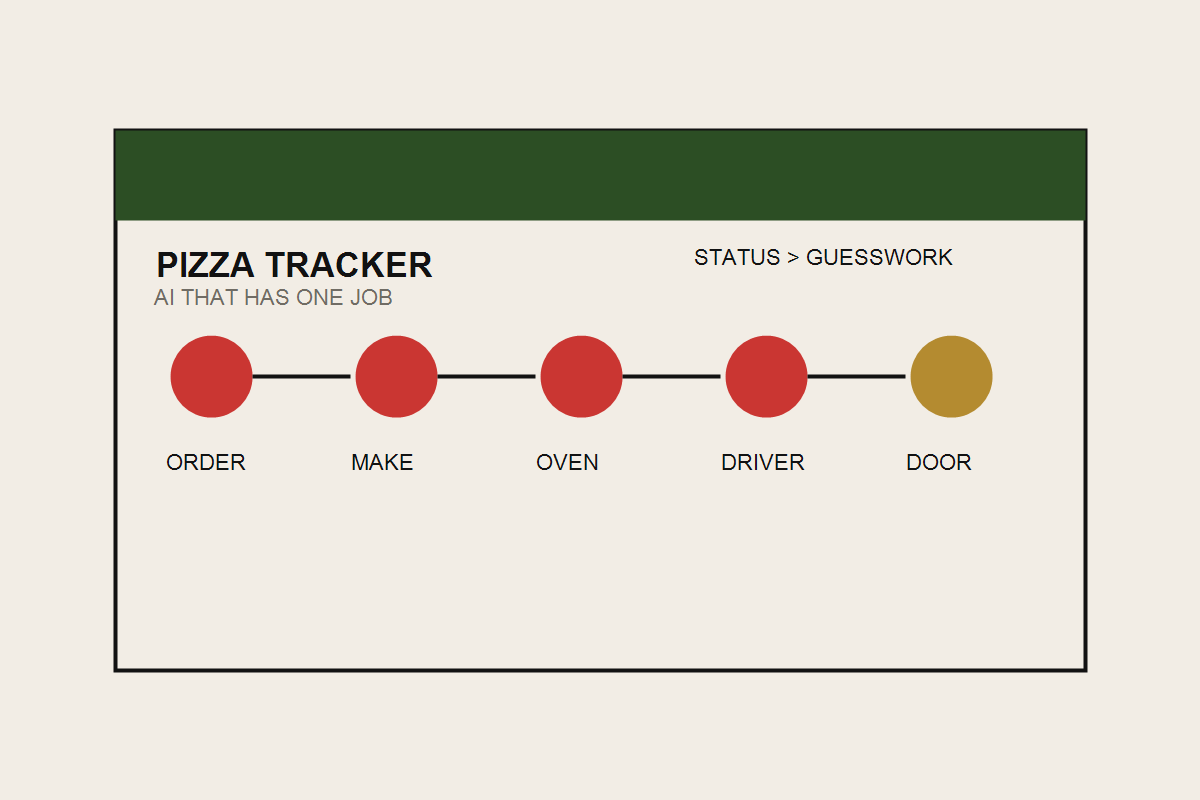
The Domino's AI story is not really about a robot making pizza. The more useful story is the Tracker. Recent coverage says Domino's has been improving order tracking with AI so customers get a clearer read on where the order is and what is happening next.
That is a good place for AI because the job is narrow. The customer is not asking for a conversation. They want to know if the pizza is being made, if it left the store, and when it will show up.
Status beats fake personality
A lot of customer-facing AI gets annoying because it tries to act human. It adds words when people want an answer. It turns a simple task into a chat.
Domino's is a cleaner example because the useful part is not personality. It is status. If the system can reduce guessing, lower support calls, and make timing feel more honest, then it is doing a real job.
The best customer AI might be the one you barely notice.
The lesson is smaller than the hype
This is also why Domino's is a better AI case study than another broad promise about automation. It shows the shape that probably works best: one problem, one clear user need, and a result people can feel.
That is the lesson worth keeping. AI gets more believable when it stops trying to be everything.