

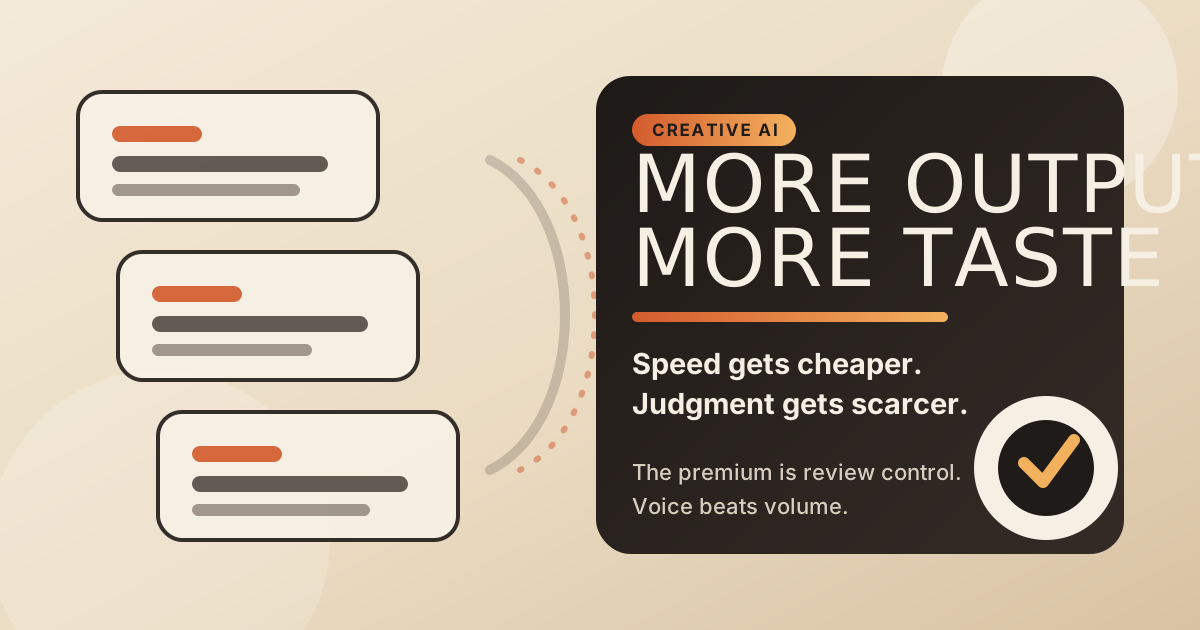
Adobe's latest workflow updates and creator research point to the same shift: AI can flood the pipeline, so judgment, editing, and point of view become the scarce part.
Adobe's newest AI push is about moving the bottleneck
Adobe's June 15 Creative Cloud update is full of workflow language, not magic language. Assisted Culling helps sort shoots faster. Stacking recommends the strongest near-duplicate. Video and image tools keep targeting cleanup work that usually burns time before the real design decision even starts.
That matches the direction Adobe has been taking all spring. Firefly's Precision Flow and AI Markup were built to make revisions more exact, and the Adobe for creativity connector for Claude is built to hand off multi-step production work across apps. The pattern is clear enough now. Adobe is not just selling faster generation. It is trying to automate more of the draft-and-prep layer around creative work.
The value shifts when faster output stops being rare
Adobe's 2026 Creators' Toolkit Report makes the business side of that shift easier to read. Adobe says 75 percent of surveyed creators describe creative AI as integrated or essential to their workflow, and 93 percent say it helps them produce content faster. But speed is not the same thing as finished work. The same report says 57 percent of AI outputs still need moderate or extensive editing before they are ready to share.
That is the practical line worth keeping. When everyone can make more, making more is not the differentiator for long. Review gets more important. Editing gets more important. Point of view gets more important. Adobe's own report leans that way too: 81 percent of surveyed creators said human judgment remains essential to creative taste.
When output gets cheap, direction becomes the expensive part.
The premium layer becomes judgment and trust
This also explains why Adobe's recent AI story keeps circling back to control. In the same report, 85 percent of surveyed creators said the final creative decision should remain theirs, and the top comfort features for more independent agents were review, edit, undo, and transparency. Those are not anti-AI requests. They are quality-control requests.
The rights side follows the same logic. Adobe's June 2 CREATOR Act post argues that style impersonation needs stronger protection as AI systems get better at copying surface signals. If the machine can help everyone draft faster, the creator's job becomes less about producing endless first passes and more about shaping, proving, and protecting what is actually theirs. That is not a smaller role. It is the part that matters more.