

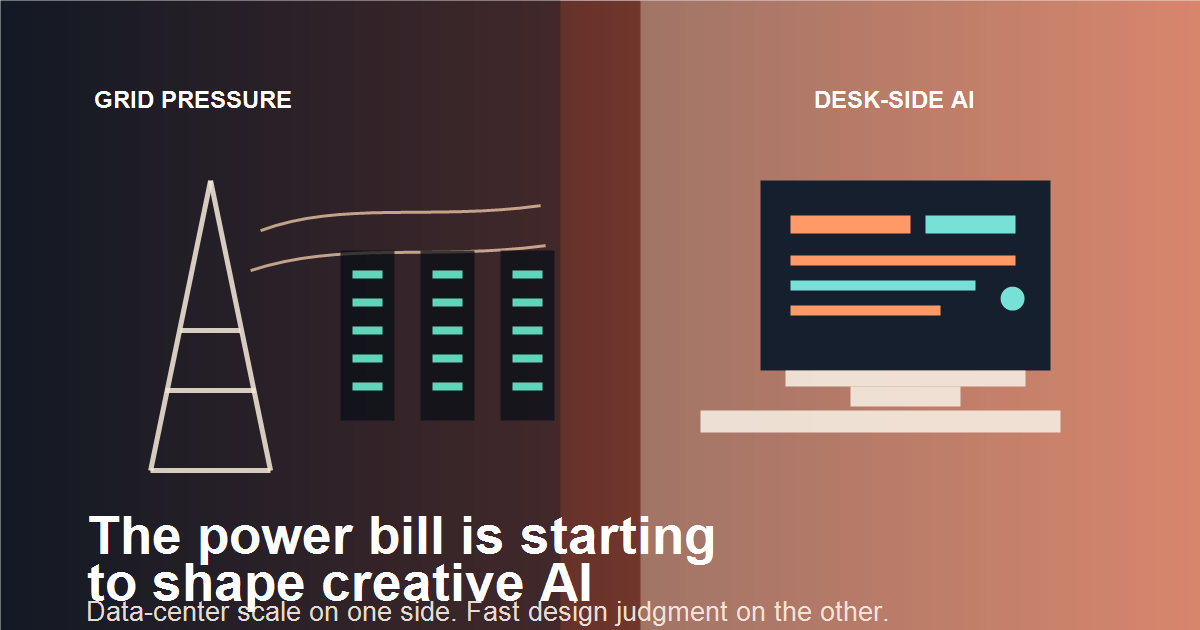
Texas and the Department of Energy are treating AI data centers as a power-and-water problem at the same time Adobe is pushing more creative AI back onto local machines.
The infrastructure fight is no longer hidden
AI used to sound like a remote cloud story you were not supposed to think about too much. That is getting harder to maintain. On June 10, Texas Governor Greg Abbott told state regulators to shield residents from data center infrastructure costs, push those costs back onto the operators, and start treating water use and neighborhood impact as part of the problem.
The same week, the Department of Energy put out a fresh request for information around AI infrastructure on DOE land and said it has 16 candidate sites positioned for rapid development. Another DOE update framed data center growth as a near-term electricity demand problem that has to be managed without breaking grid reliability or affordability. The quiet part is now in the open: AI infrastructure is becoming public-policy material.
That makes Adobe's local push look more practical
Adobe's recent NVIDIA work lands differently in that context. Its May 31 RTX Spark announcement was framed around Photoshop, Premiere, and Substance 3D getting faster AI, faster editing, and faster effects on the machine in front of you. That sounded like a performance story. It now looks more like product positioning.
When creative work depends on lots of quick revisions, local acceleration solves a different problem than giant training clusters do. A designer does not need every small crop, grade, or cleanup pass to make a long round trip through an expensive power-hungry stack. The more the grid and the politics around it tighten up, the more useful desk-side AI starts to look.
The cleaner split is scale in the cloud, judgment at the desk
Adobe and NVIDIA are still building bigger cloud systems for Firefly models, marketing workflows, and 3D brand pipelines. That part is not going away. But the practical version of AI for design may end up being split on purpose. The data center handles model training, enterprise orchestration, and heavy shared services. The local machine handles the quick creative loop where timing, control, and taste matter most.
That is a stronger direction than pretending every AI task belongs in one giant remote stack. It treats compute location as part of product design. And for graphic design tools in particular, that may be the real shift worth watching now: not just what the model can do, but where the useful part of the work should run.
The new product question is not just what AI does. It is where the useful part of the work runs.