

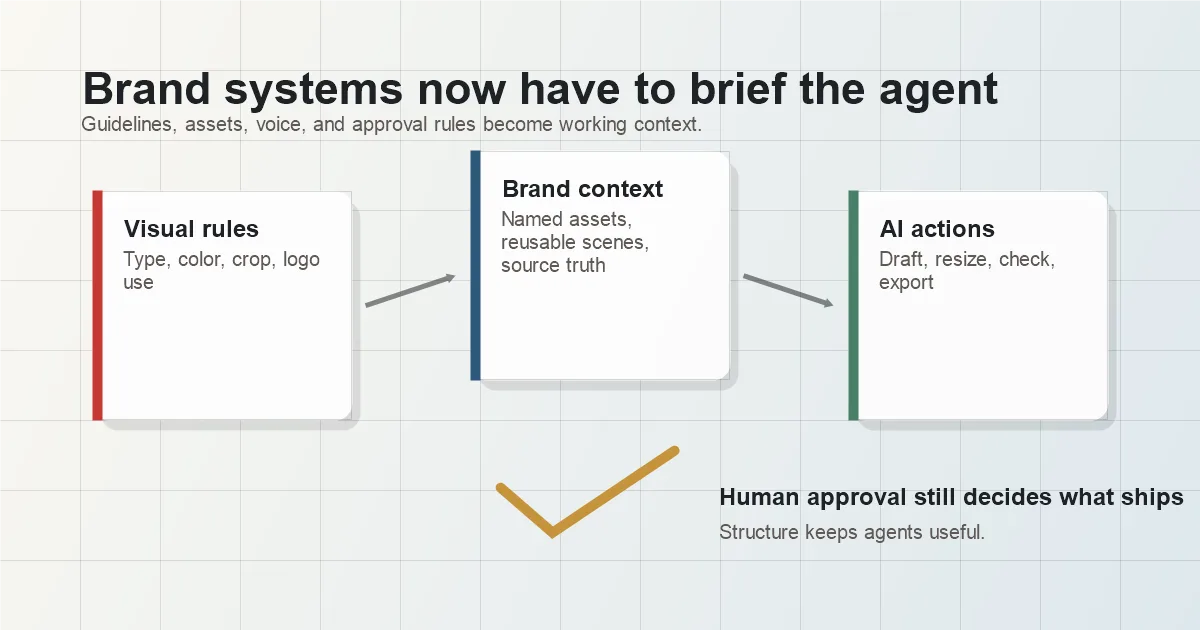
Adobe's newest creative-agent push makes one thing clear: brand systems need to work as structured operating context, not just reference documents.
The style guide is turning into working context
Adobe's June 18 Creative Agent announcement is not just another prompt box story. Adobe is moving assistants into Photoshop, Premiere, Illustrator, InDesign, Frame.io, and Firefly, with the promise that they can orchestrate multi-step work from a described outcome. The important part is not that a designer can ask for a resize or a rough cut. The important part is that the assistant needs context before it can make useful choices.
That makes the old brand-system problem more urgent. A PDF guideline can tell a person what the type scale, color palette, image tone, logo rules, and approval process should be. An agent needs those same decisions in a form it can find, apply, and check. The stronger system is no longer just the prettiest standards document. It is the one with clean assets, named components, clear rules, and enough structure to keep automated work from drifting.
Consistency is becoming an asset problem
Firefly's new Elements and Projects features point in the same direction. Adobe says creators will be able to save characters, locations, objects, assets, generations, and creative context so work can keep continuity across versions. The Verge's coverage made that practical: once a character, environment, or brand kit has a name, the tool can reuse it without forcing the creator to describe everything again from scratch.
Disney Imagineering is the sharper business example. Adobe says Firefly Foundry will use Imagineering's own design catalog and proprietary material to support sketch-to-image, concept art, 3D rendering, and CAD-related workflows. That is not generic AI decoration. It is brand memory turned into production support. The brand system becomes a controlled source of truth for what the machine is allowed to help make.
A brand system that cannot be reused by the tool starts acting like a poster on the wall.
The designer's job shifts toward rules, review, and judgment
Adobe's Brand Visibility announcement shows the same logic on the marketing side. Brands now have to understand how they appear across AI surfaces, then update owned content so both people and AI systems can read the same narrative. That is a content problem, but it is also a design-systems problem. The brand has to be legible to the channels that now summarize, recommend, resize, remix, and route attention.
The reassuring part is that control is still the hinge. Adobe's Creators' Toolkit Report says 85 percent of surveyed creators believe the final creative decision should remain with the creator, and 81 percent say human judgment is essential to creative taste. That is the clean takeaway for graphic design work. Agents can make production faster, but they make weak systems more obvious. The durable value is still in the rules, the source material, the edit, and the final call.