
The interesting part of Adobe's recent Firefly push is not bigger prompts. It is the move toward sliders, markup, and agent workflows that let designers steer the work.
The prompt is not the product anymore
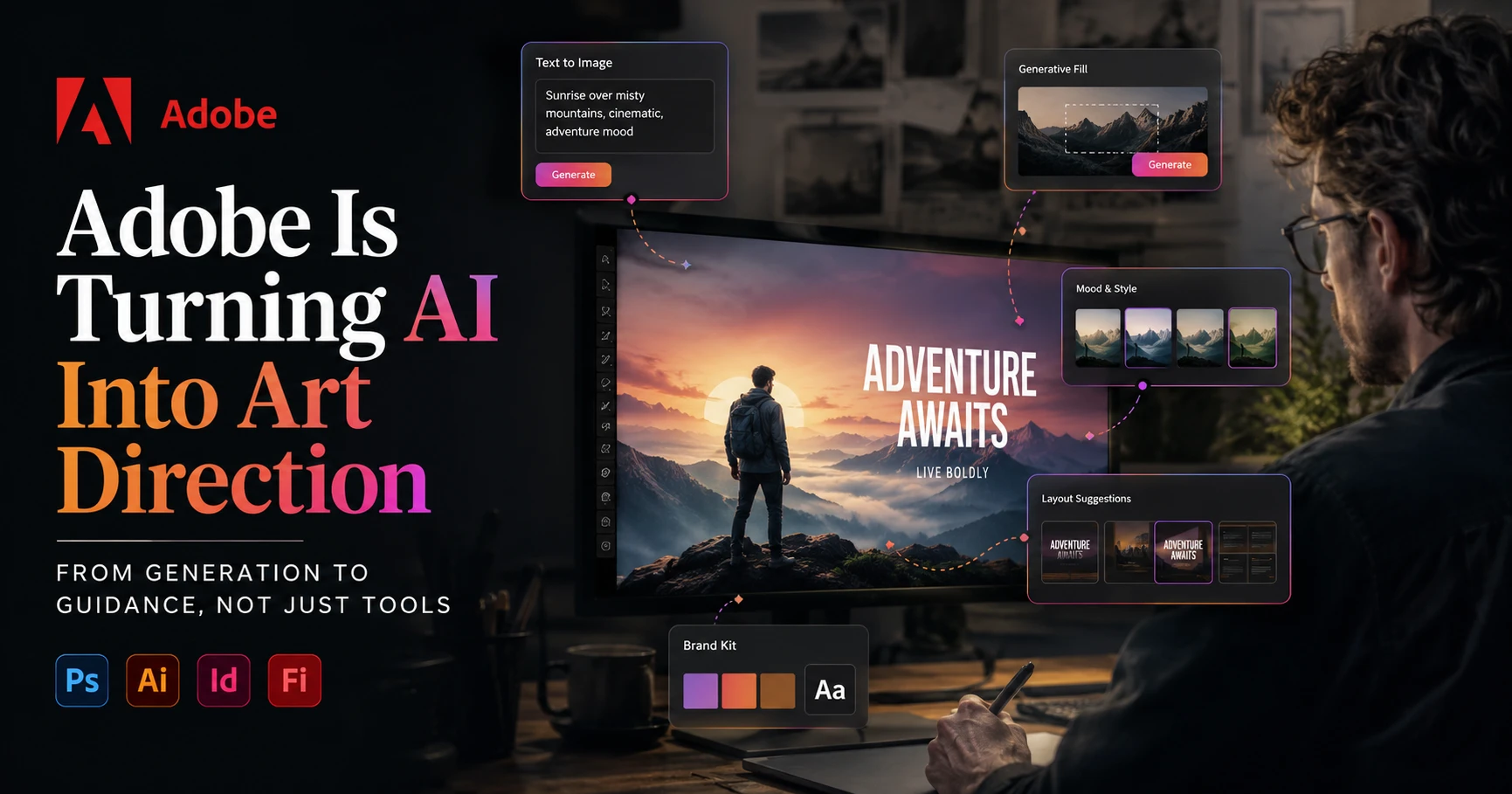
Adobe's most interesting recent AI work is not another promise about faster generation. It is the interface shift around generation. Firefly's Precision Flow makes image changes behave more like a controlled range than a one-shot guess, and AI Markup turns a vague prompt into a directed edit on a specific part of the image.
That sounds small, but it changes the feel of the job. A designer no longer has to keep rewriting prompts and hoping the model lands close enough. The work becomes more like art direction: push the mood warmer, isolate the area that matters, compare variations, keep the one that actually fits the brief.
The agent layer makes taste more important, not less
Adobe is also building toward a larger workflow change. Its Firefly AI Assistant and the Adobe for creativity connector for Claude are both framed as ways to orchestrate multi-step work across Photoshop, Firefly, Illustrator, Premiere, Express, and other tools from one conversational surface.
The useful part is not that a chat box can touch more apps. The useful part is that the human role shifts upward. If the software can handle more sequencing and more production steps, then the scarce skill becomes judgment: what to keep, what feels on brand, what reads clearly, and what still looks generic even if it was technically fast.
Creative AI gets stronger when the machine does more execution and the person does more choosing.
That matches the real pressure on design teams
Adobe's April survey gives a practical reason this direction matters. The company said creatives reported using AI on more than 40 percent of their projects, 94 percent said it helps them produce content faster, and both creatives and marketers said content demand has at least doubled over the last two years.
That is why the better interface matters more than the bigger headline. Teams do not just need more images. They need faster review, cleaner revisions, and a way to keep quality from collapsing when output volume goes up. The stronger version of AI for design may end up looking less like magic and more like a very editable review system.